Every fall, the same thing happens on properties across the country: summer flowers start fading, fall flowers haven't gone in yet, and for a week or two — sometimes longer — the beds out front look like nobody's home.
It's not a big mistake. Nobody planned for it. It just happens in the gap between one landscaping task ending and the next one starting. But it's also one of the most visible, most avoidable curb appeal failures a commercial property can have — and it tends to happen at exactly the wrong time, right as leasing tours, tenant walkthroughs, and ownership visits pick back up for the fall season.
If you manage a commercial property, here's what actually causes the gap, and the checklist to make sure it doesn't happen on your site this year.
The short answer: timing and ownership.
Most flower programs treat fall flower installation for commercial properties as a separate job from summer removal, two tasks, sometimes two different crews, sometimes two different vendors entirely. When those tasks aren't sequenced together, you end up with:
None of these are hard problems to solve individually. The issue is that they all have to be solved together, on the same timeline, by people who are actually talking to each other.friction.
Use this to evaluate your current flower program — or to know what to ask for if you're bringing in a new vendor this year.
1. Confirm the installation window before summer flowers are pulled
Fall flowers should go in while summer color is still full, not after it's removed. This keeps beds visually complete throughout the transition instead of creating a bare period in between. If your vendor's process is "remove, then reorder, then replant," that sequence is where the gap comes from.
2. Time the install around your irrigation shutdown
New fall plantings need consistent watering to root in before winterization shuts the system off. An install that happens too close to shutdown doesn't get enough irrigation cycles to establish properly, which shows up later as weak, leggy growth or plants that don't survive the first cold snap.
3. Ask who removes the summer flowers — and when
This should be built into your fall cleanup service, not treated as a separate line item or a separate crew's responsibility. When cleanup and fall installation are handled by the same team on the same visit, the old flowers come out and the new ones are already established, no in-between period where the bed is empty.
4. Check the palette for consistency, not just availability
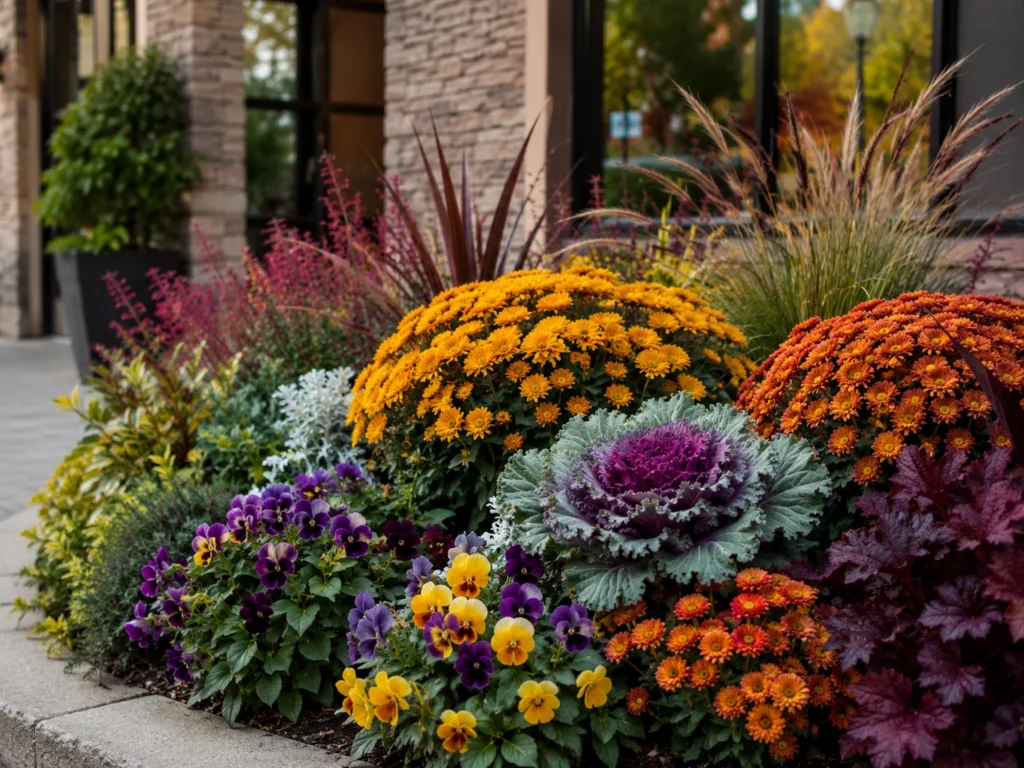
A rushed fall order often means "whatever the nursery has," which can mean five or six different plant types crammed into one bed. That reads as clutter, not color. A tighter palette like pansies, ornamental kale, ornamental cabbage, violas, mums, used in grouped masses rather than one-offs, holds up better visually and is easier to maintain consistently across multiple properties.
5. Confirm what happens after install day
A lot of fall flower programs stop the moment the crew leaves. But fall flowers still need monthly attention, fertilizer applications, spot maintenance, a second set of eyes checking that everything's establishing the way it should. If your current program doesn't include anything beyond the initial planting, ask what a maintained plan would look like instead.
6. Get one point of contact for the entire transition
The single biggest predictor of whether a property avoids the fall gap is whether one team owns start to finish, sourcing, timing, removal, installation, and follow-up care. The moment a transition splits across multiple vendors or multiple internal approvals, timing slips, and timing slips are exactly what create bare beds.
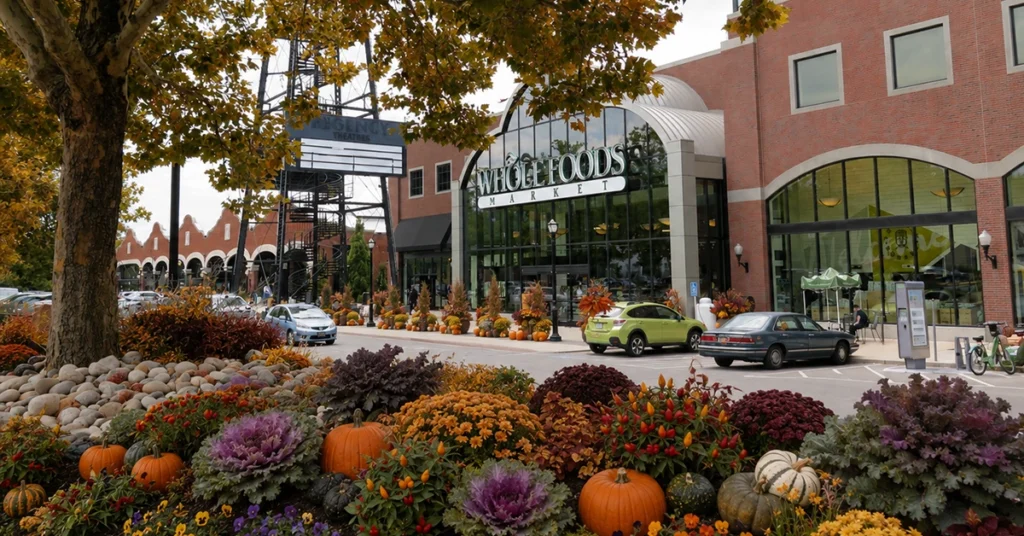
It's easy to treat this as a minor seasonal inconvenience. It's worth remembering what a bare or patchy bed actually communicates to the people walking your property:
Flower beds are one of the few things on a commercial property that everyone notices and almost no one thinks about until they look wrong. Getting the fall transition right is a small, controllable way to make sure that's never the story your property tells.
If you only take one thing from this: fall flowers should never be a separate project from summer removal. The moment they're treated as two different jobs, the gap becomes almost inevitable.
Properties that get this right treat it as one continuous transition, owned by one team, timed around irrigation — not two disconnected tasks that happen to land in the same season.
Rubicon's fall flower installation for commercial properties is built around exactly this checklist — fall color installed before summer fades, timed to your irrigation schedule, transitioned during fall cleanup, and maintained monthly through the season. If your current fall plan doesn't check every box above, talk to Rubicon about what a fully-managed transition looks like on your property.
Call 801.928.2800 or request a site visit