For many Utah property managers, water restrictions are no longer a future concern.
They are becoming an operational reality.
Following one of the driest winters in recent memory, Governor Spencer Cox declared a statewide emergency as drought conditions worsened across Utah. Water agencies across the state have already begun implementing restrictions, reducing irrigation flexibility, and encouraging aggressive conservation efforts.

And for commercial properties, HOAs, multifamily communities, and retail centers, the pressure is growing quickly.
Because while everyone understands the need to conserve water, properties are still expected to:
That balancing act is becoming more difficult every season.
For years, many commercial irrigation systems operated with very little scrutiny.
Water schedules were set.
Landscapes stayed green.
And unless something failed dramatically, most systems continued running the same way season after season.
But restrictions are changing that.
What many property managers are discovering is that water inefficiency often was already present long before restrictions arrived.
The drought is not necessarily creating the problem.
It is exposing it.
Across many properties, inefficiencies are quietly adding up every day:
Under normal conditions, these issues may remain manageable.
Under restrictions, they become operational liabilities.
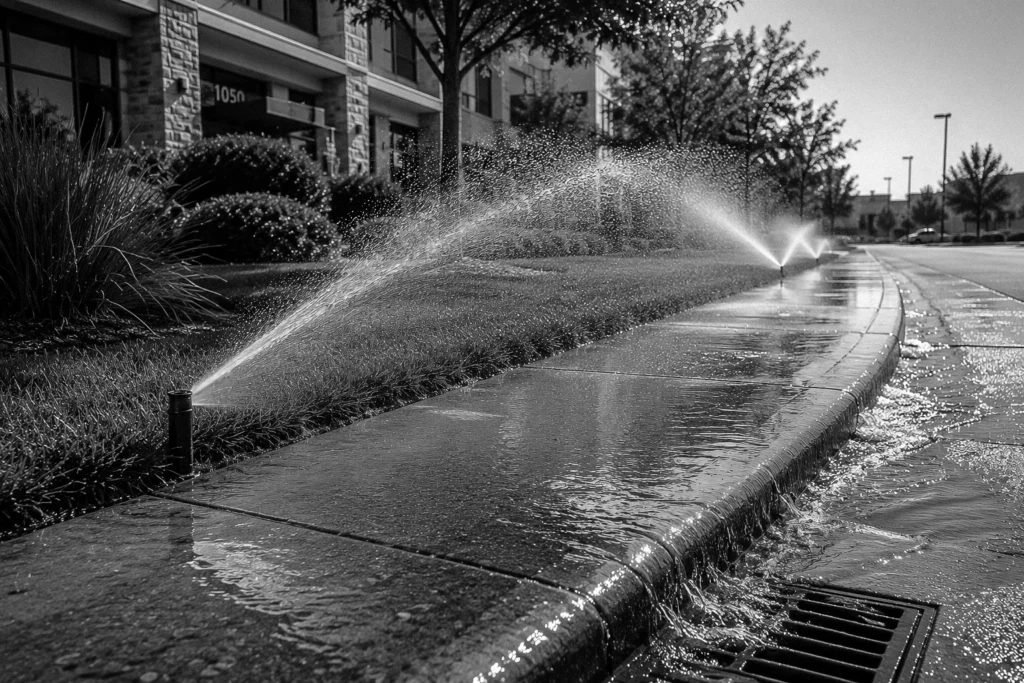
This year, many Utah communities are introducing stricter watering guidance much earlier than normal.
Some areas have already begun:
At the same time:
For property managers, this creates pressure from every direction.
Because properties are now expected to maintain appearance while operating with less margin for error.
One of the biggest mistakes properties make during restrictions is reacting too late.
When turf stress becomes visible, many teams respond by:
This often creates even more inconsistency across the property.
The strongest-performing properties usually approach the problem differently.
Instead of simply trying to use less water, they focus on gaining more control over how water is being used.
That shift changes everything.
The most proactive property teams are already preparing for long-term restrictions by improving operational visibility and irrigation efficiency now, before summer stress peaks.
Many irrigation systems have not been reviewed in years.
Controllers may still be operating based on assumptions from previous seasons rather than current conditions.
Proactive evaluations help identify:
Even small improvements can create meaningful reductions across an entire portfolio.
Traditional irrigation systems typically water based on fixed schedules regardless of:
Modern smart irrigation systems adapt automatically to changing conditions.
This allows properties to:
For many properties, smart irrigation is becoming less of a luxury and more of an operational necessity.
Properties with shallow root systems often struggle the most during restrictions.
Shallow-rooted turf requires more frequent watering and tends to show stress quickly under reduced schedules.
Long-term landscape health depends on:
Preparing landscapes before severe summer heat arrives can dramatically improve resilience later in the season.
One of the biggest operational challenges for large properties is simply understanding where water is going.
Without visibility, teams often operate reactively.
Modern water management systems help properties monitor:
This allows property teams to make proactive decisions instead of waiting for visible problems or billing surprises.
The conversation around water is changing.
This is no longer only about conservation messaging.
For commercial properties, HOAs, and multifamily communities, water management is becoming a core operational issue tied directly to:
The properties that prepare early will have far more flexibility than the ones forced to react later under pressure.
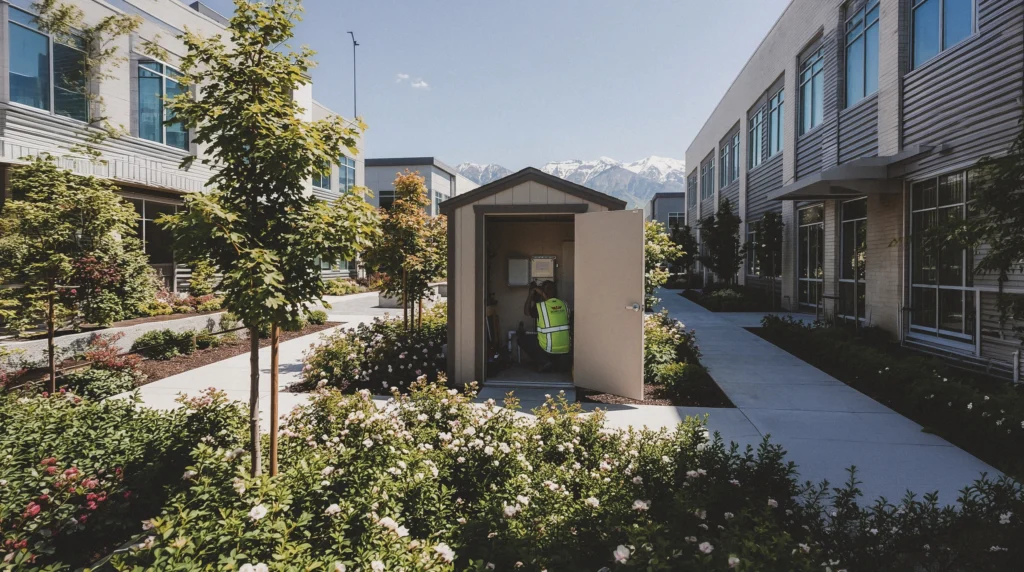
At Rubicon, we help property teams improve operational visibility, irrigation efficiency, and long-term landscape performance through proactive water management strategies.
Through solutions like:
we help commercial properties prepare for restrictions before they become larger operational problems.
Because the goal is not simply reducing water use.
The strongest operational decisions happen before problems escalate.
If your properties are beginning to feel pressure from Utah’s drought conditions and irrigation restrictions, now is the time to evaluate how your systems are performing before summer stress intensifies.
Rubicon can help your team assess irrigation efficiency, identify operational risks, and build a smarter long-term water management strategy.