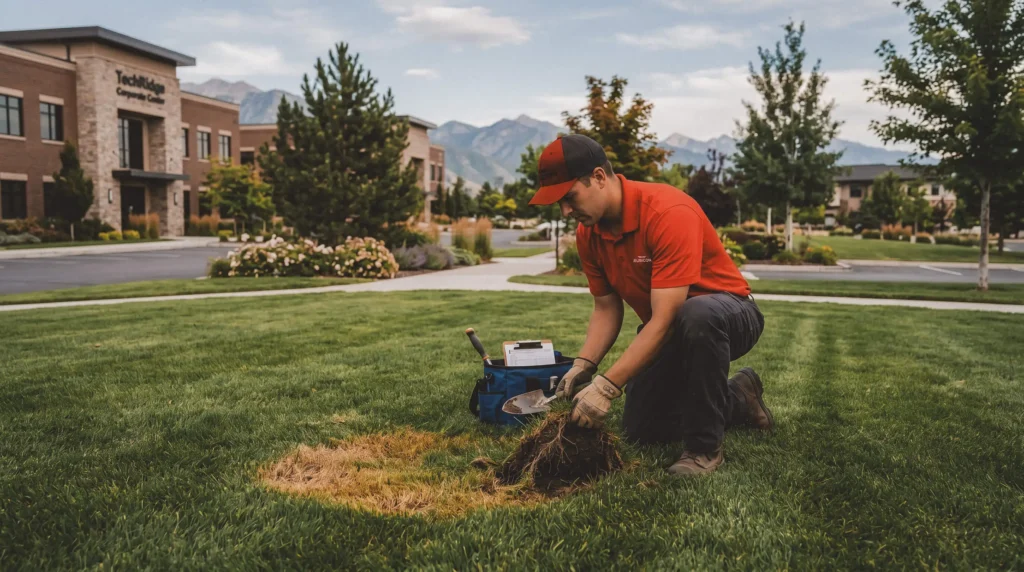
In many commercial landscapes, what appears to be a small patch of yellowing grass may actually be a much larger problem developing underneath the soil.
One of the most damaging turf issues commercial properties face during summer is grub infestation.
And unfortunately, by the time visible damage appears on the surface, the root system underneath may already be heavily compromised.
For commercial properties, HOAs, retail centers, and multifamily communities, grub damage can quickly turn into:
That is why preventative grub control has become an important part of long-term commercial landscape management.
Grubs are the larvae of beetles, commonly Japanese beetles, June bugs, or chafer beetles.
They live below the soil surface and feed directly on turfgrass root systems.
As grubs feed, they destroy the roots responsible for:
Without healthy roots, turf can no longer support itself properly, especially during hot summer conditions.
The result is stressed, weakening grass that eventually dies.
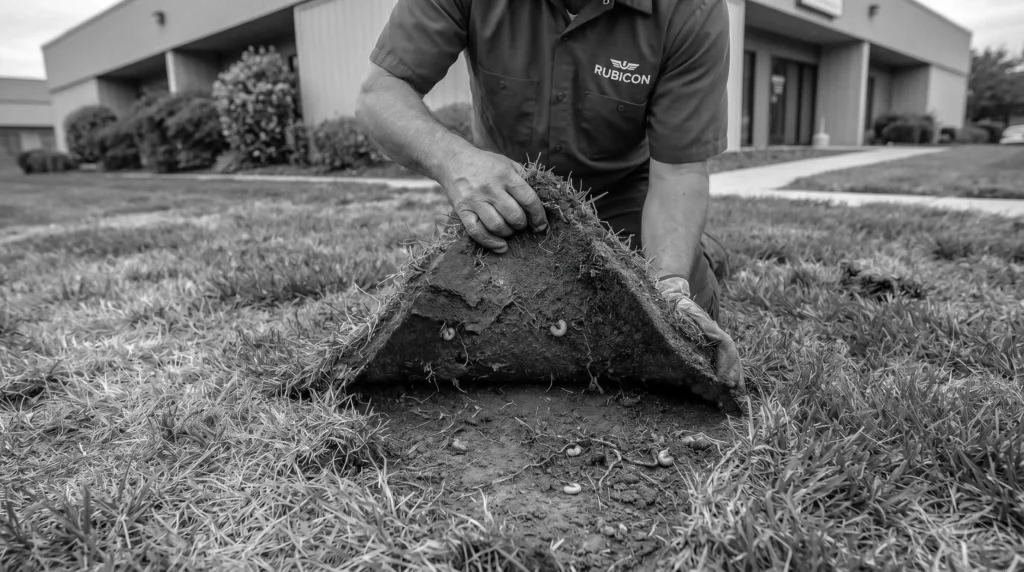
One of the first visible signs of grub damage is irregular yellow or brown spots developing throughout the turf.
At first, these spots often resemble:
That is what makes grub damage difficult to identify early.
However, as root destruction continues, the turf begins losing its ability to anchor into the soil.
One of the most common indicators of severe grub damage is that the grass begins pulling up easily like loose carpet.
This happens because the root system underneath has already been eaten away.
At that stage, the visible damage on top is usually only part of the problem.
One of the biggest misconceptions about grub damage is assuming the affected area only includes the visible yellow spots.
In reality, the infestation underneath the soil is often spreading well beyond what can currently be seen from the surface.
That means:
For many commercial properties, this becomes the reason turf replacement areas grow much larger than initially anticipated.
Once root destruction reaches a severe level, the only long-term solution is often removing and replacing damaged turf entirely.
That process can become expensive quickly across:
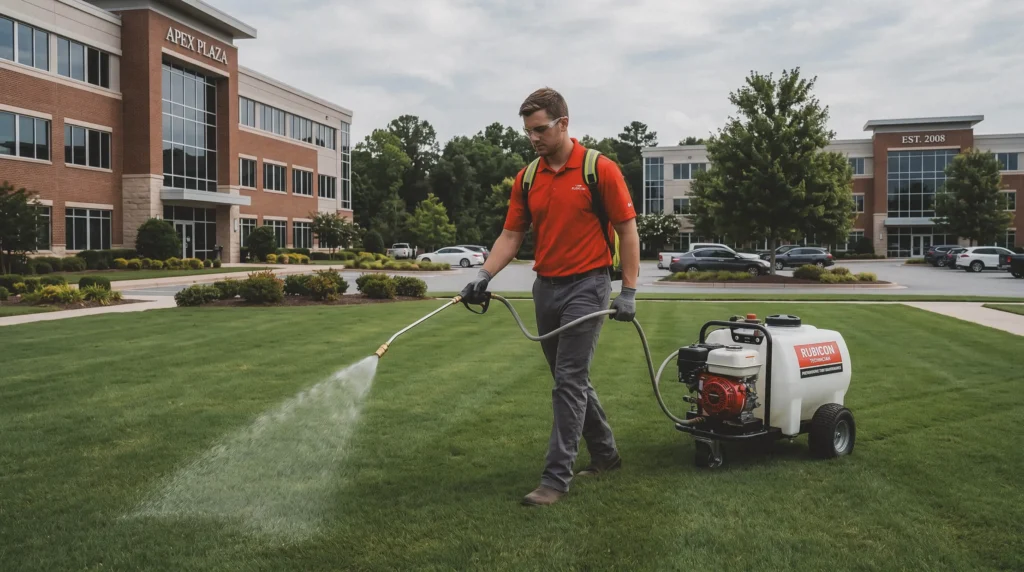
The most effective way to manage grubs is through preventative treatment before major damage develops.
Preventative grub control treatments are typically applied during late spring and early summer, depending on local beetle activity and seasonal conditions.
These treatments target grubs during earlier development stages before large-scale root destruction occurs.
Preventative applications help:
For commercial properties managing large turf areas, preventative treatment is significantly more cost-effective than widespread turf replacement later in the season.
Once visible turf damage appears, treatment becomes much more difficult.
Curative grub treatments require:
This is because mature grub populations are already actively feeding underground.
Additionally, treatment plans often need to account for:
In many cases, several applications are necessary because one treatment may eliminate active grubs while newly hatched populations emerge later.
That creates a longer recovery process for already stressed turf.
Utah’s increasing summer heat and drought conditions are making grub damage even more problematic for commercial landscapes.
Turf already under pressure from:
becomes much less capable of recovering from root damage caused by grubs.
This creates a compounding effect where:
For many properties, grub management is no longer just a pest control issue.
It is becoming part of broader operational landscape protection.
The strongest commercial landscapes are not maintained reactively.
They are protected proactively through:
Because once severe grub damage becomes visible, the cost and complexity of recovery increase dramatically.
At Rubicon, we help commercial properties identify turf risks early and implement proactive grub management strategies designed to protect long-term landscape health and reduce unnecessary turf replacement costs.
Our approach focuses on:
Because protecting healthy turf is significantly easier and more cost-effective than rebuilding damaged landscapes after infestation spreads.
Grub damage often develops long before properties realize there is a problem underneath the surface.
The earlier infestations are identified and treated, the easier it is to protect root systems and prevent large-scale turf loss.
If your property is beginning to show unexplained yellow patches, thinning turf, or signs of stress, Rubicon can help evaluate whether grub activity may be contributing to the problem and recommend proactive next steps before damage spreads further.