For commercial and multifamily properties, waiting for visible spring pressure can turn weed control into a curb-appeal emergency. A stronger commercial landscape maintenance plan identifies current weeds, treats them at an appropriate time, documents the work, and coordinates what happens next.
Rubicon's Fall Defender Round is designed around that approach. It is a post-emergent broadleaf turf application, meaning it targets weeds that are already present. It is not a pre-emergent application, and that distinction shapes the timing, product selection, expectations, and follow-up plan.
Broadleaf weeds do not disappear simply because their leaves become less noticeable. Perennial weeds can survive from season to season through established roots, crowns, or underground stems. When spring temperatures return, those established plants may resume growth before a property team has completed its first corrective visit.
That is why fall deserves more than a final mowing and irrigation shutdown. It provides a practical opportunity to review where weeds are present, determine whether they are appropriate targets for post-emergent control, and organize the spring program before weed pressure becomes highly visible.
The goal is not to promise a perfectly weed-free property from one application. The goal is to reduce established pressure, protect turf standards, and give the next season a better starting point.
The terms sound similar, but they describe different jobs.
Utah State University Extension's turf-weed guidance separates pre-emergence and post-emergence options and identifies early-fall post-emergent treatment for several common broadleaf weeds, including dandelion, clover, common mallow, and field bindweed.
For property managers, the practical question is not which label sounds better. It is whether the property is dealing with weeds that are already established, weeds that have not yet germinated, or both. A professional recommendation should make that distinction clear.
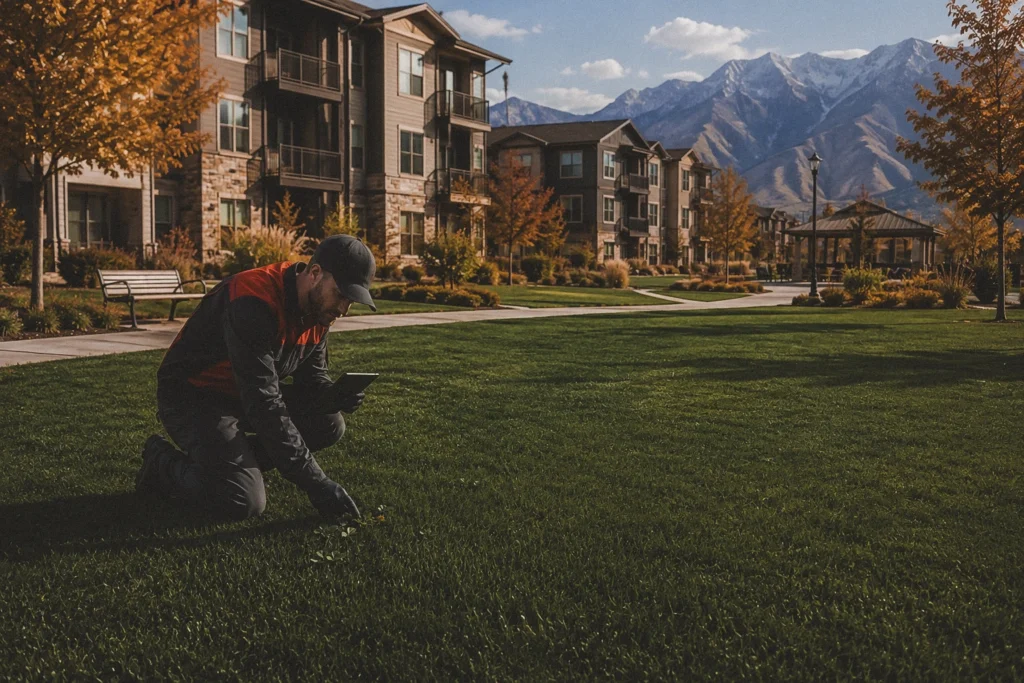
Colorado State University Extension identifies early September through early November as a useful period for controlling perennial broadleaf weeds such as dandelion, plantain, and clover. As those plants move reserves toward stems and roots, a properly selected fall treatment can move with the plant into those structures.
Timing still depends on more than the calendar. The target weeds should be living and able to respond. Drought stress, frozen tissue, excessive heat, wind, precipitation, irrigation timing, mowing, and the condition of new or recently established turf can all affect whether an application is appropriate.
That makes fall weed control a decision window, not a one-date promise. Before scheduling treatment, Rubicon evaluates the property, the weeds, the turf, the weather, and the selected product label.
Not every green plant in turf responds to the same treatment. Some broadleaf weeds are relatively straightforward to manage. Others spread through taproots, rhizomes, stolons, or underground stems and may require repeated treatment or a different strategy.
Common fall review targets may include:
The list is not a guarantee that one product or one visit will control every species. Weed maturity, turf species, site conditions, weather, prior treatments, and label restrictions all influence the recommendation. Difficult perennial weeds may require follow-up applications and longer-term correction of the conditions helping them persist.
A post-emergent application can address existing weeds, but it cannot correct every reason they appeared. Consistent commercial lawn care should also support turf density, appropriate mowing, clean edges, and routine observation so weeds have less room to establish.
Low fertility, compaction, drought stress, poor drainage, thin turf, and inconsistent irrigation may contribute to recurring weed pressure. A coordinated commercial fertilization program can address nutrient and turf-vigor needs, while commercial irrigation services can identify coverage gaps, leaks, overspray, and scheduling problems that weaken turf or favor certain weeds.
This is the difference between treating a symptom and managing a property standard. The application matters, but so do the mowing, fertility, irrigation, soil, and follow-up decisions surrounding it.
Weed pressure carries different operational consequences across a property. Weeds near a primary entrance, leasing office, resident courtyard, monument sign, retail frontage, or high-traffic walkway may affect perception more quickly than weeds in a low-visibility utility area.
A useful review should map the property by priority. It should distinguish high-visibility turf from lower-priority areas, identify recurring problem zones, and compare weed pressure with irrigation coverage, soil condition, traffic, shade, and maintenance history.
For multifamily communities, resident reports and on-site team observations can add important context. For commercial campuses and retail properties, account teams should compare weed pressure with tenant expectations, planned events, site inspections, and spring curb-appeal deadlines.
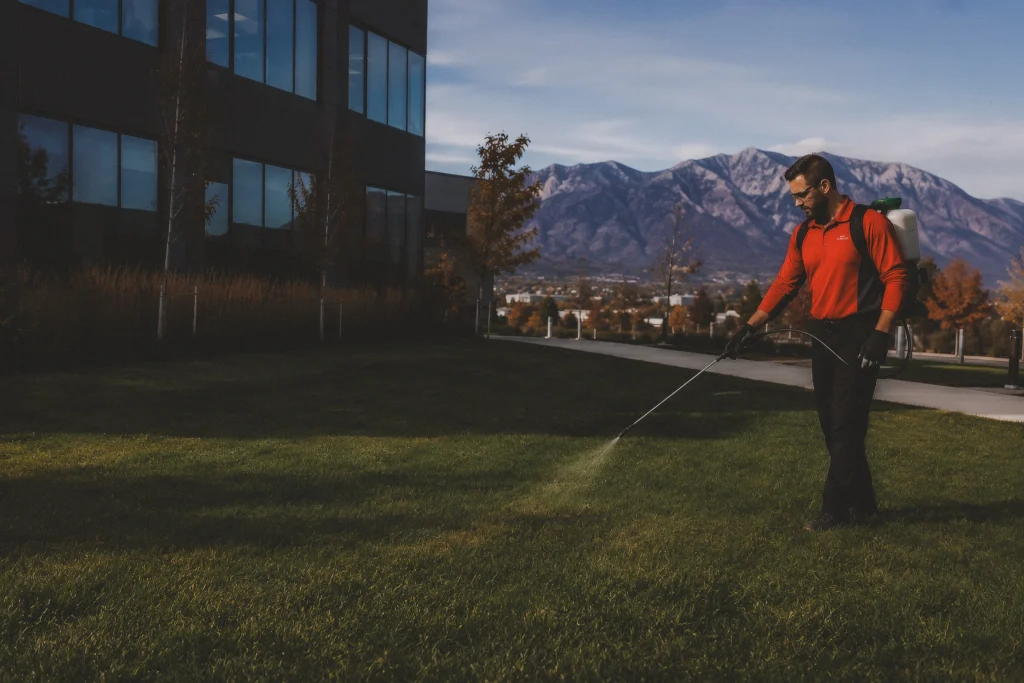
A strong fall post-emergent program should be built around the property rather than a generic spray route. The service process should include:
The value is not simply that an application occurred. The value is that the work was selected intentionally, completed under appropriate conditions, and connected to a plan for the next season.
EPA pesticide-label guidance explains that pesticide labels define where, how, how much, how often, and by whom a product may be used. The label is legally enforceable, so marketing language and field execution must stay within the approved directions and precautions for the selected product.
A property manager should expect the service team to account for wind, temperature, precipitation, irrigation, mowing, nearby ornamentals, newly seeded or sodded turf, people and pets, and any required notification or reentry instructions. Those details vary by product and site.
Because results vary by property, Rubicon bases its recommendations on the identified weeds, turf health, weather, product selection, application timing, and necessary follow-up.. Results depend on the weed species, weed maturity, infestation level, turf health, weather, soil conditions, application timing, product selection, and follow-up work.
Property teams should not have to guess what was treated or what comes next. A useful service record should identify:
Utah pesticide regulations and record requirements state that commercial pesticide applicators must keep records for every application. Clear documentation also gives property managers a shared record for internal teams, residents, tenants, boards, and future service decisions.
A fall application should not be treated as a stand-alone promise. Utah winters vary, and weed response can change with temperature, moisture, snow cover, turf health, and the timing of spring growth.
During a typical winter, fall control may reduce the amount of established broadleaf pressure returning with spring growth. During a warmer winter, weeds may become active sooner and require earlier monitoring. In either case, the fall service should create time for Rubicon to assess results and complete the appropriate spring follow-up before weed pressure becomes a larger curb-appeal issue.
The strongest plan connects fall identification and treatment with spring inspection, preventive or corrective applications where appropriate, turf nutrition, irrigation readiness, and ongoing monitoring.
Fall post-emergent weed control is not simply about spraying before winter. It is about identifying what is already present, choosing an appropriate response, completing the work under the right conditions, and building a documented bridge into spring.
Rubicon helps commercial and multifamily property teams connect weed control with turf health, irrigation, seasonal timing, and accountable follow-up. The goal is cleaner-looking turf, fewer reactive spring decisions, and one coordinated plan for the property.
Schedule a Fall Turf and Weed Control Review.
Call 801.928.2800
