For commercial and multifamily properties, proactive commercial tree care should begin before the first heavy snow or ice event. September and October provide an important planning window while the canopy is still visible, summer stress can still be observed and property teams have time to prioritize the work ahead.
The goal is not to prune every tree in fall. The goal is to understand current conditions, separate urgent needs from planned work and create a documented path from inspection to action.
Routine landscape maintenance does not always reveal what is happening throughout a tree. Dead or broken branches may be hidden in a full canopy. Weak branch connections can be easy to miss from the ground. Irrigation may keep turf green while failing to provide the slow, deep moisture a mature tree needs.
Those conditions matter because trees occupy high-consequence areas across a commercial property. Branches may extend over parking spaces, sidewalks, entrances, playgrounds, signs, lighting, service lanes and buildings. When snow, wind or ice adds load, a neglected concern can become a safety issue, an access problem or an unplanned expense.
Tree health should therefore be managed as part of the property's broader commercial landscape maintenance strategy, with tree observations, irrigation conditions, site maintenance and follow-up work coordinated through one clear plan.
A useful assessment should look beyond trimming. It should evaluate visible conditions throughout the canopy, trunk, soil and root zone, then connect those findings to timing, priority and responsible next steps.
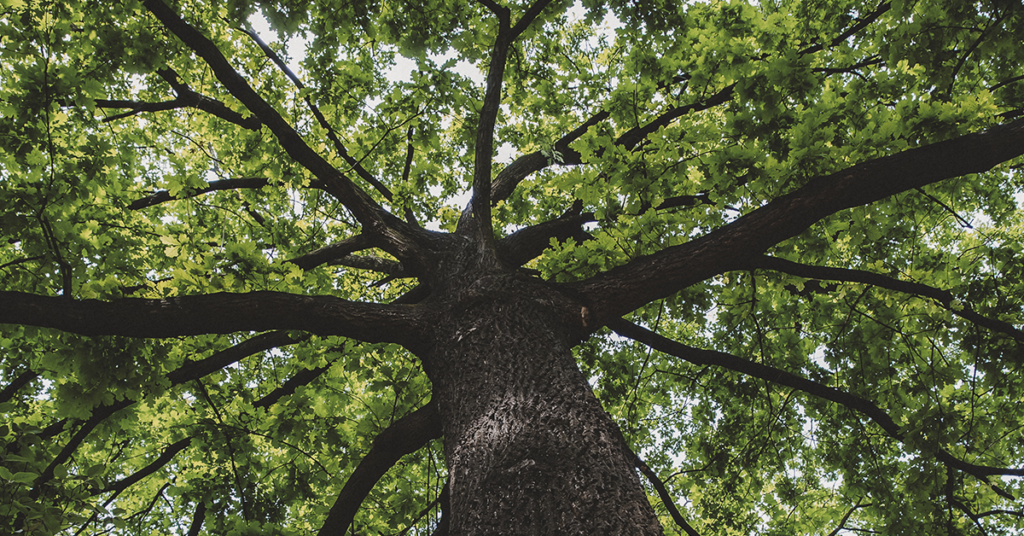
Canopy and structure
Visible tree health
Soil, moisture and the root zone
When the assessment identifies broader bed, soil or pest concerns, coordinate recommendations through a commercial plant care program rather than treating the tree as an isolated feature.
Documentation and planning
A long list of observations is not enough. Property managers need a report that distinguishes what may need attention now from work that can be budgeted and scheduled later.
Good tree care is not measured by how much material is removed. It is measured by whether the right work is completed for the right reason and at the right time.
Utah State University explains that pruning is generally best completed in winter or early spring before buds swell, when trees are dormant. Pruning can be performed at other times with the proper knowledge, but timing should reflect the tree, objective and current condition. USU: Pruning Landscape Trees
Dead, diseased, damaged or safety-related material may justify more immediate action. Structural or corrective pruning that is not urgent can often be documented in fall and scheduled during dormancy.

Fall planning should include a review of how each tree moved through summer. Thin canopies, early color change, leaf scorch, sparse growth or dry soil may point to irrigation or root-zone concerns that should be understood before winter.
USU recommends slow, deep irrigation that reaches the deeper soil profile used by tree roots. Short, frequent watering may wet only the upper soil and encourage shallower rooting, leaving trees more vulnerable to drought, wind and other stress. USU: Landscape Tree Water Requirements
If coverage is incomplete, recommendations may include schedule corrections, emitter changes, repairs or additional drip lines coordinated through Rubicon's commercial irrigation services. Watering recommendations should always reflect tree size, species, soil, weather and site conditions.
A fall assessment can document visible concerns and help property teams prioritize next steps, but not every condition can be diagnosed from a routine walkthrough. Internal decay, root failure, complex structural defects or questions about likelihood of failure may require a more specialized evaluation.
Guidance from the International Society of Arboriculture recommends involving a qualified arborist when managing tree hazards and risk. The appropriate professional may recommend routine care, structural support, pruning, removal or continued monitoring based on the condition and level of concern. ISA: Managing Tree Hazards and Risk
This distinction protects both the property team and the tree. A general tree and site review should not be presented as a formal tree-risk assessment unless the work is performed by an appropriately qualified professional using the proper scope and method.
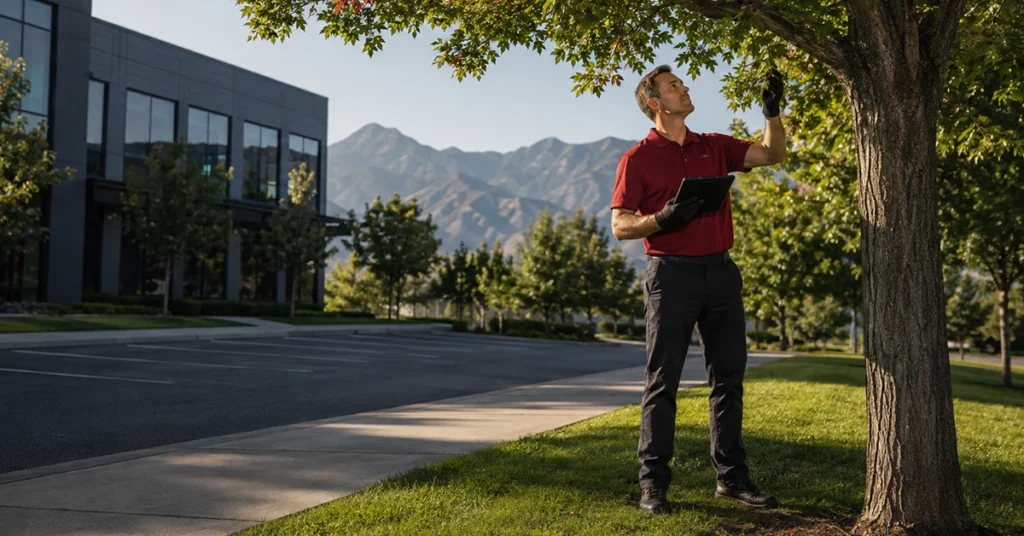
Tree priorities are influenced by more than biology. Property use matters. A branch over an unused landscape bed does not carry the same operational concern as a similar branch above a primary entrance, resident walkway, parking row, playground or emergency-access route.
The assessment should therefore consider how people move through the site, where vehicles and equipment are stored, how lighting and signage function, where winter snow will be staged and which areas would create the greatest disruption if tree work became urgent.
For multifamily communities, resident reports can add important context. Repeated concerns about falling twigs, blocked lighting, rubbing branches, low clearance or irrigation problems should be mapped to specific trees and compared with the field observations.
The inspection and report create the opportunity to move from one-time tree work to a managed program. Findings may lead to recommendations for:
Each recommendation should be prioritized, scoped and presented for approval before service is scheduled. That gives property teams clearer budgets, better timing and fewer surprise decisions after winter weather arrives.
Fall tree care should not be sold as another trimming visit. It is an opportunity to evaluate visible conditions, organize priorities and protect an asset that influences safety, curb appeal, shade and long-term property value.
Rubicon helps commercial and multifamily property teams move from scattered tree concerns to a documented plan. One review provides clearer timing and more consistent care, with one accountable partner for the work ahead.
Schedule a Fall Tree Health and Winter Readiness Review.
Call 801.928.2800