For commercial and multifamily properties, waiting for indoor complaints and then reacting one service call at a time creates unnecessary disruption. A stronger commercial pest control program begins outside. It combines inspection, accurate identification, exclusion, property maintenance, documentation and targeted control when conditions warrant it.
That makes September a practical time to review the perimeter, identify current pressure and correct the conditions that could turn an exterior nuisance into an interior operating problem.
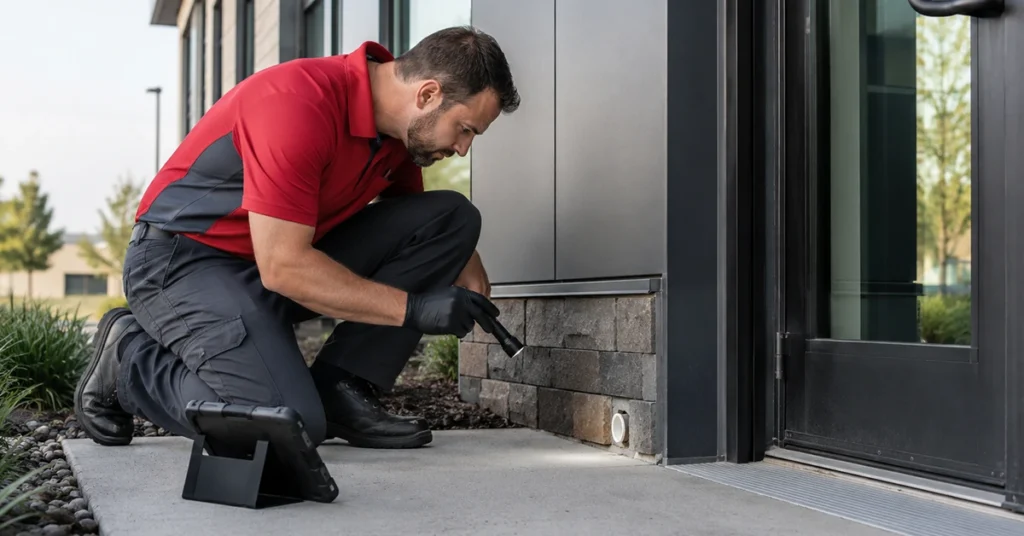
Several nuisance pests become more visible around Utah buildings as summer transitions into fall. Utah State University reports that elm seed bug invasions of homes and buildings can continue through late September and identifies pest-proofing as the best way to address them. USU Extension: Elm Seed Bug
Those seasonal patterns do not mean every sighting requires a pesticide treatment. They mean property teams have a useful window to inspect activity, verify what is present and decide what needs to be sealed, cleaned, repaired, monitored or treated.
The objective is simple: address pest pressure before it becomes a tenant, resident or facility complaint.
The best pest-control question is not simply, "What should we spray?" It is, "What is allowing pests to gather here or move inside?"
The Environmental Protection Agency's integrated pest management guidance emphasizes monitoring, correct identification, prevention and targeted control. For buildings, that approach translates into inspection, exclusion, sanitation, moisture correction and a response matched to the pest and the conditions observed. EPA Integrated Pest Management Principles
That is why a professional fall program should be built around the property, not around a generic treatment route.
A useful review should document both pest evidence and the property conditions contributing to it. The inspection should cover:
When vegetation, irrigation or debris contributes to pest pressure, coordinate those corrections with the property's commercial landscape maintenance plan so the same conditions do not continue working against the pest-control program.
Commercial properties carry their own pest-control pressure points. Loading docks, delivery doors, utility rooms, food-service tenants, shared waste areas and frequent exterior traffic can create multiple routes into a building.
A reactive approach often produces repeated callbacks without resolving the operating condition behind them. The same gap under a service door, spill near a dumpster or irrigation leak can continue supporting activity after a treatment is complete. For offices, retail centers, medical campuses, industrial sites and mixed-use properties, a fall review should connect pest findings to facility action. The recommendation may involve pest service, but it may also require a door repair, sanitation correction, drainage work, landscape adjustment or follow-up coordinated through commercial facility management.
Multifamily pest control involves more than the exterior walls. One building may include hundreds of resident routines, shared hallways, trash rooms, storage areas, mechanical spaces and adjacent units. Effective multifamily pest management therefore requires cooperation among residents, property managers, maintenance teams and pest-management professionals.
The property team should make it easy for residents to report pests, leaks and moisture early. Reports should be handled without blame so people do not wait until activity spreads. Maintenance staff should receive clear assignments for sealing, sanitation and moisture correction, while the pest professional documents identification, monitoring and any treatment performed.
That team approach gives management a clearer picture of whether a report is isolated, connected to a neighboring unit or linked to a broader building condition.
Not every insect or spider around a building presents the same risk. Different pests require different responses, and appearance alone can lead property teams toward the wrong treatment or timing.
Identification affects timing, location and method. It can also prevent unnecessary treatment. A documented program should record what was observed, where it was found, the level of activity and the basis for the recommended response.
This is one of the central ideas behind integrated pest management: monitor first, identify correctly and act when evidence and conditions justify it.
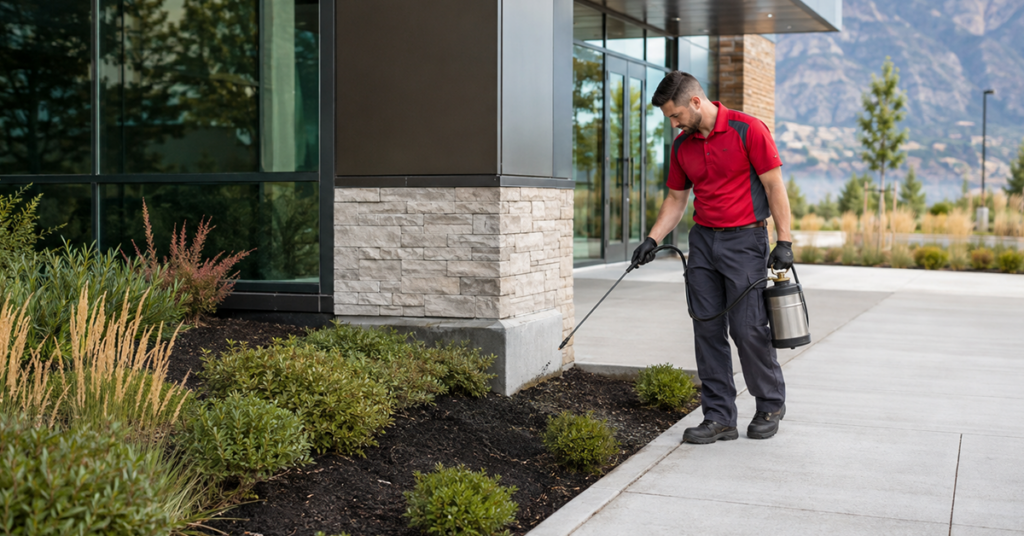
Pesticides can be an appropriate part of a pest-management program, but they should not replace exclusion, sanitation, moisture correction or monitoring. The response should fit the identified pest and the specific condition at the property.
In Utah, commercial pesticide applicators are required to keep records for every application. Property managers should expect clear documentation of any treatment completed at their site. Utah Pesticide Regulations and Record Requirements.
A property manager should not have to guess what happened during a pest visit. A useful service record should identify:
This is where pest control becomes part of disciplined property operations. Clear records improve communication, reduce repeated explanations and give everyone a shared understanding of what needs to happen next.
Fall pest planning may also identify concerns in valuable landscape trees, but building-perimeter pest control and tree health care are different scopes.
For properties with significant tree assets, a separate commercial tree care review led by an arborist may determine whether a targeted trunk-injection or deep-root application is appropriate for a specific pest, disease or nutrient need. These techniques should follow tree-by-tree inspection and depend on the diagnosis, species, season, site conditions, product label and applicator credentials.
Keeping the scopes distinct helps property teams assign the right expertise while still managing the entire exterior as one connected operating environment.
Fall pest control is not simply a seasonal spray. It is a property review that connects pest pressure with building condition, sanitation, moisture, landscape management, communication and accountability.
Rubicon helps commercial and multifamily property teams identify exterior pest pressure and address the conditions that allow it to become an interior problem. The goal is fewer reactive calls, clearer documentation and a property that is better prepared for the seasonal transition.
Schedule an Exterior Pest Pressure Review.
Call 801.928.2800