In many commercial facilities, hidden electrical issues begin developing long before anyone notices a problem. A loose connection, overloaded breaker, or overheating component may continue operating quietly for weeks or months while internal temperatures steadily rise.

By the time the issue becomes visible, the consequences can be significant:
That is why more commercial properties are turning to thermal imaging inspections as part of their preventative maintenance strategy.
Thermal imaging allows facilities to identify hidden electrical issues early, before they escalate into operational or safety problems.
Thermal imaging, sometimes called infrared electrical scanning, uses specialized infrared cameras to detect heat patterns inside electrical systems.
Every electrical component generates heat while operating. Under normal conditions, that heat remains within an expected range.
However, when electrical components begin experiencing stress, resistance, imbalance, or failure, they often generate abnormal heat signatures before visible damage occurs.
Thermal imaging cameras make those temperature differences visible.
This allows certified technicians to identify potential issues inside:
without interrupting normal operations.
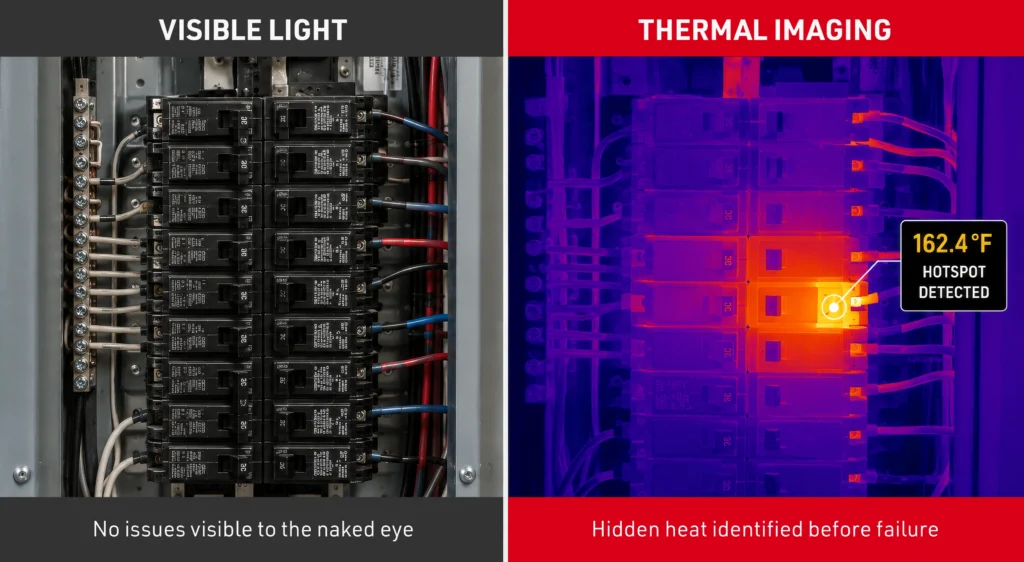
Excessive heat is one of the earliest warning signs of electrical failure.
Abnormal heat buildup may indicate:
Left unresolved, these issues can lead to:
Thermal imaging helps facilities identify these risks early while corrective action is still manageable and significantly less expensive.
At Rubicon, thermal imaging inspections are designed to be straightforward, minimally disruptive, and operationally focused.
Step 1: Schedule the Inspection
The process begins by coordinating a convenient inspection time with the facility team.
Because thermal imaging is most effective while electrical systems are under normal operating load, inspections are typically scheduled during active business hours when equipment is functioning normally.
This provides the most accurate representation of real-world electrical conditions.
Step 2: Certified Electricians Perform Panel Scans
Rubicon sends certified and licensed electricians to perform thermal imaging scans throughout the facility.
Using specialized infrared imaging equipment, technicians inspect electrical panels and connected systems for abnormal heat signatures.
During the inspection, technicians evaluate:
The infrared camera captures temperature variations that are invisible to the naked eye.
Areas generating excessive heat immediately stand out during the scan, allowing technicians to identify developing problems before failure occurs.
Importantly, this process is non-invasive and does not require dismantling systems or interrupting facility operations in most situations.
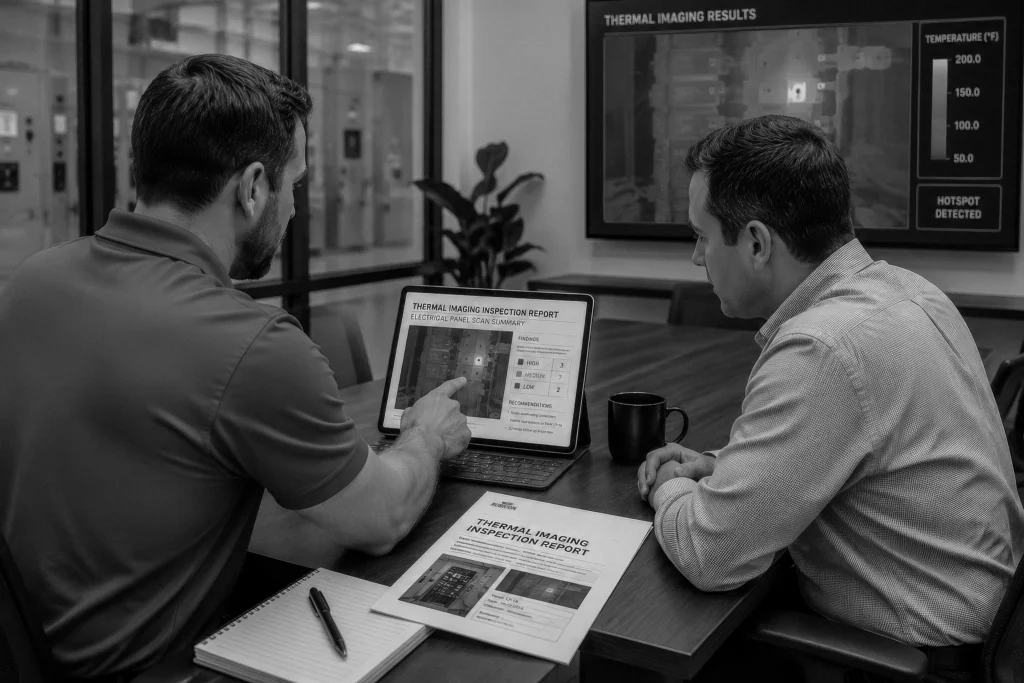
After the inspection is completed, Rubicon prepares a detailed thermal imaging report documenting the findings.
The report typically includes:
This documentation helps facility teams:
In many cases, these reports may also support:
For commercial facilities, electrical failures rarely impact only one system.
A single panel issue can create:
Preventative thermal imaging inspections help reduce these risks by increasing visibility into system health before failure occurs.
Rather than reacting after disruption happens, facilities gain the ability to proactively manage electrical risk.
The strongest facility operations are not built around reacting faster to emergencies.
They are built around preventing unnecessary disruption in the first place.
Thermal imaging gives property teams a practical, proactive way to identify hidden electrical issues before they escalate into operational problems.
For commercial facilities focused on reliability, safety, and operational consistency, preventative electrical inspections are becoming an increasingly important part of long-term maintenance planning.
Rubicon helps commercial properties reduce operational risk through disciplined preventative maintenance, electrical inspections, and proactive facility support.
If your facility is evaluating thermal imaging inspections or preventative electrical panel audits, our team can help you assess potential risks before they become costly disruptions.
Contact Rubicon to learn more about thermal imaging inspections for commercial facilities.