Water restrictions are tightening.
Temperatures are rising earlier.
Water costs continue increasing.
And property expectations are not getting lower.
At the same time, commercial properties are still expected to maintain:
For many properties, traditional irrigation systems are struggling to keep up with those demands.
That is why smart irrigation is becoming one of the most important tools for protecting commercial landscapes long term. creates a serious fire risk.
Many irrigation systems still operate using fixed schedules.
The controller is programmed to water:
And unless someone manually adjusts the system, it continues operating the same way regardless of:
That approach may have worked when water was inexpensive and unrestricted.
Today, it creates major inefficiencies.
In many cases, properties are unknowingly:
The problem is not usually intentional neglect.
It is lack of real-time adaptability.
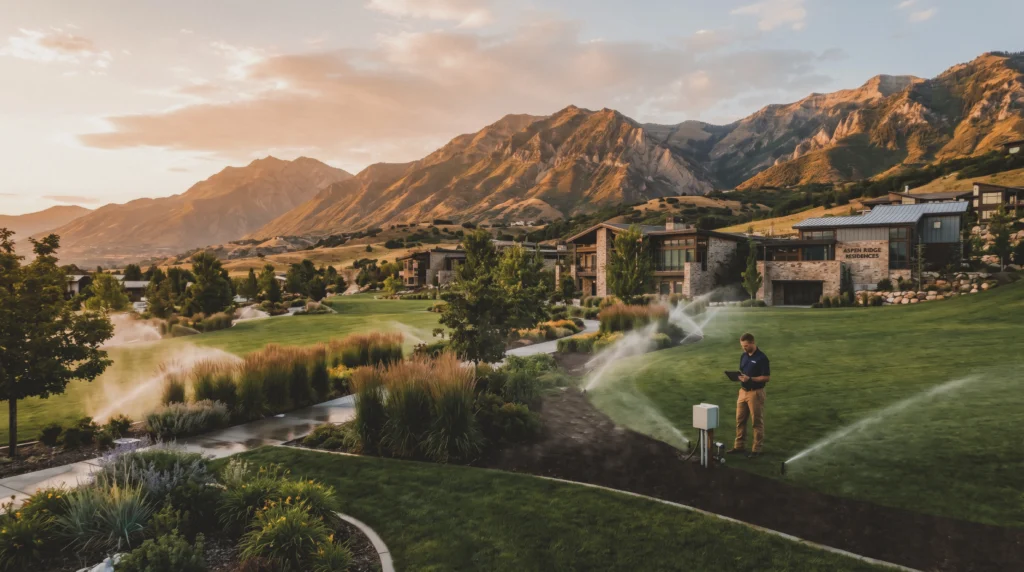
Smart irrigation systems use real-time environmental data to automatically adjust watering schedules based on current conditions.
Rather than relying only on static timers, smart systems can respond to:
This allows irrigation systems to apply only the amount of water the landscape actually needs.
No more.
No less.
The result is a landscape that remains healthier while operating far more efficiently.
Commercial landscapes operate at a larger scale than residential properties.
Small inefficiencies repeated across:
can create substantial operational costs very quickly.
Even modest overwatering across multiple sites can result in:
Smart irrigation helps properties reduce those inefficiencies before they become larger operational problems.
One of the biggest advantages of smart irrigation is improved landscape health.
Traditional watering schedules often encourage shallow root systems because landscapes receive frequent, unnecessary watering.
Shallow roots create turf that becomes:
Smart irrigation encourages healthier watering cycles that support:
This becomes especially important during Utah summers when landscapes face prolonged heat and increasing irrigation restrictions.
Water restrictions across Utah are changing how properties approach irrigation management.
Many cities and communities are:
Under these conditions, efficiency becomes critical.
Smart irrigation helps properties maximize every watering cycle by adjusting automatically to actual environmental demand.
For example:
This allows properties to conserve water without sacrificing landscape performance unnecessarily.

One of the biggest operational challenges for large properties is simply understanding how irrigation systems are performing.
Many traditional systems provide very little visibility into:
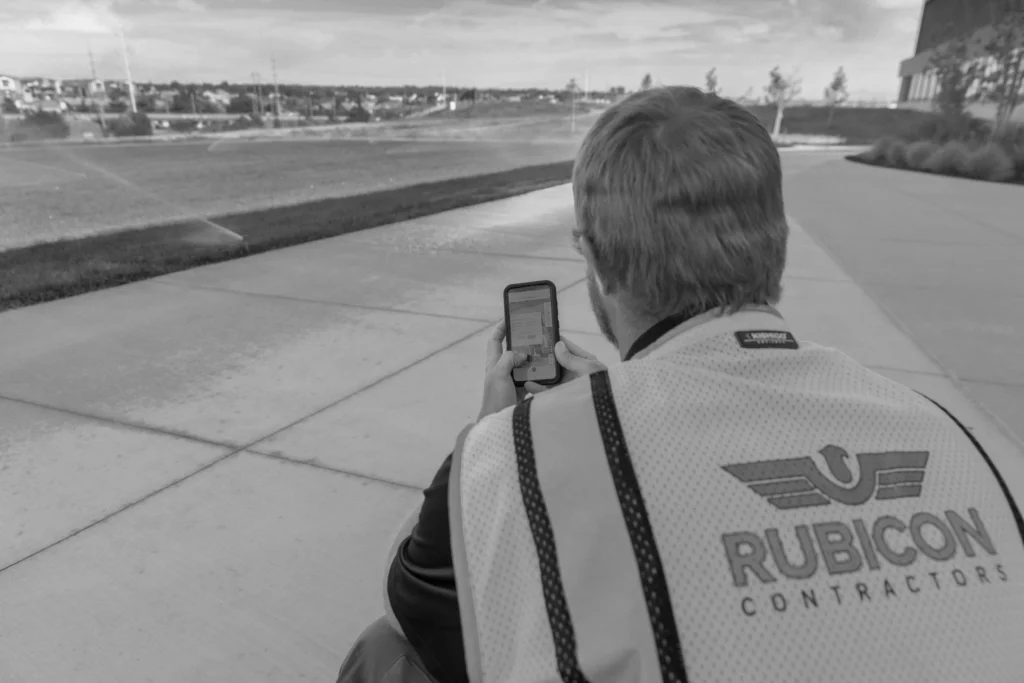
Modern smart irrigation platforms provide far greater operational transparency.
Property teams can monitor:
This visibility helps facilities respond proactively rather than waiting for:
The strongest commercial properties are moving away from reactive irrigation management.
Instead of constantly adjusting systems manually after problems appear, they are building smarter operational systems that adapt automatically and reduce long-term friction.
Smart irrigation supports:
For many properties, this is becoming less about technology and more about operational reliability.
At Rubicon, we help commercial properties improve irrigation efficiency, reduce water waste, and strengthen long-term landscape performance through proactive water management solutions and smart irrigation systems.
Our approach focuses on:
Because protecting commercial landscapes today requires more than simply watering more.
It requires watering smarter.
Water restrictions, drought conditions, and operational pressures are not likely to disappear anytime soon.
The properties that adapt early will be in a much stronger position to maintain healthy landscapes while controlling long-term operational costs.
If your property is evaluating smart irrigation upgrades or looking for ways to improve irrigation efficiency, Rubicon can help your team build a smarter long-term water management strategy.